Louis Sclavis
Louis Sclavis
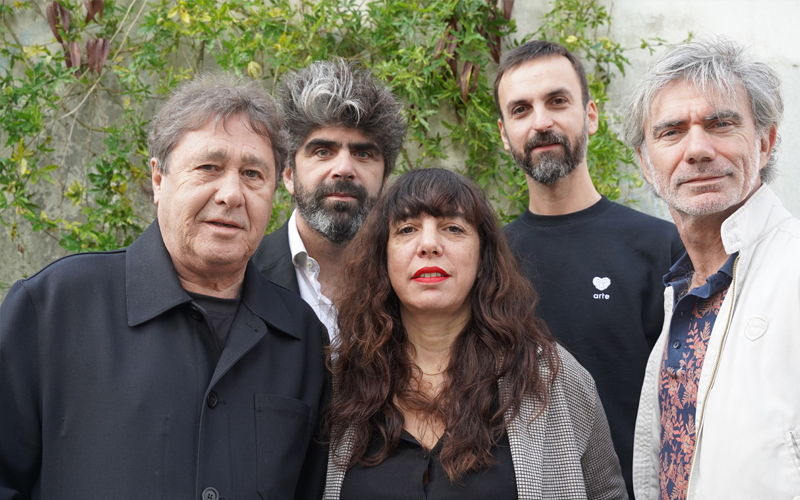
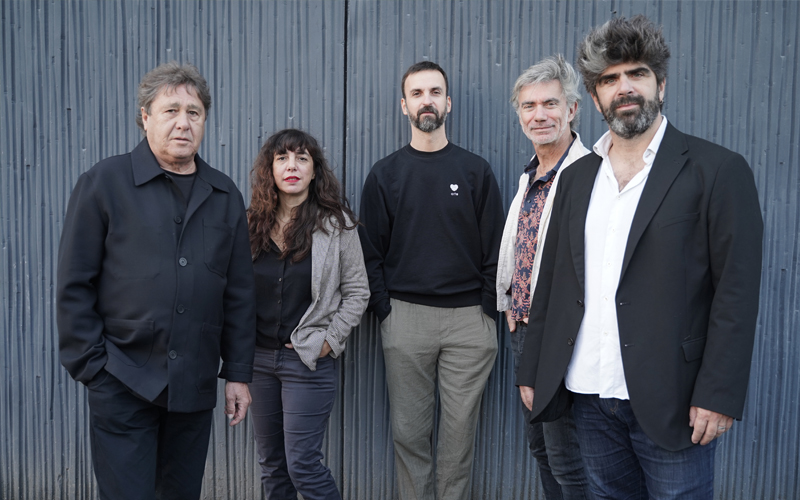
LOUIS SCLAVIS 5ET
Louis Sclavis, clarinet
Sarah Murcia, double bass
Benjamin Moussay, piano
Olivier Laisney, trumpet
Christophe Lavergne, drums
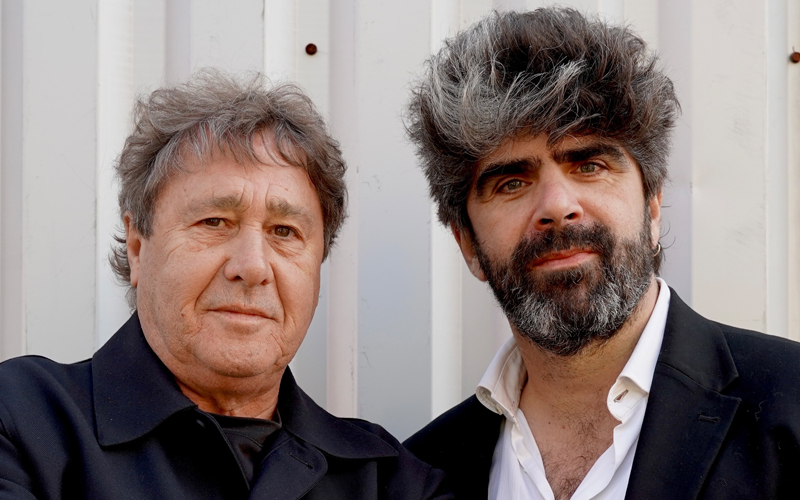
Created in November 2015 to mark the 30th anniversary of Strasbourg’s Jazzdor Festival, Louis Sclavis‘ ensemble, accompanied by Benjamin Moussay on piano, Sarah Murcia on double bass and Christophe Lavergne on drums, is now taking a new turn and becoming a quintet with the addition of trumpeter Olivier Laisney. Inspired by the contrasting sounds of the woody sweetness of the clarinet and the brownish colours of the brass, Sclavis has composed a new programme entitled ‘India’, a direct reference to the title of his famous 1987 album ‘Chine’. A series of lyrical and decidedly rhythmic themes that, while only distantly connected to India in the form of vague reminiscences and diffuse influences, strongly inspire the musicians‘ imagination and take them on a baroque journey of great evocative power.
Louis Sclavis
Louis Sclavis is one of the finest clarinettists in free jazz and avant-garde music.
He plays improvised music with unusual clarity and precision. And although his technique is formidable, it does not overshadow his musicality; Sclavis is an extremely expressive player.
Sclavis began studying the clarinet at the age of nine. He played in a local brass band before attending the Lyon Conservatory. From 1975 to 1982, he played in various ensembles, most notably the Henri Texier Quartet and Chris MacGregor’s Brotherhood of Breath. In 1982, he formed his own band, Le Tour de France, consisting of six musicians from different regions of France. He also played with a number of prominent free jazz musicians, including Evan Parker, Lol Coxhill, Tony Oxley and Peter Brötzmann, and made recordings for the FMP and NATO labels.
In 1984, he recorded Clarinettes, a solo album for the Ida label. In the same year, he also founded a new quartet; the band recorded two albums, Chine (1987) for Ida and Rouge (1991) for ECM. In 1987, he founded a septet, which also recorded for Ida. In 1988, he was awarded the Prix Django Reinhardt as French jazz musician of the year. In the same year, he founded the Trio de Clarinettes with Jacques di Donato and Armand Angster, which played improvised pieces as well as works by its members and classical composers such as Brian Ferneyhough and Pierre Boulez.
At this time, he met choreographer and dancer Mathilde Monnier, with whom he collaborated on several performances.
Sclavis’s fame grew over the next ten years; in 1991, he won a British Jazz Award and recorded frequently for FMP and ECM. His projects included a trio with Aldo Romano and Henri Texier, as well as recordings and performances with his clarinet trio, a septet, drummer Trilok Gurtu, and a large ensemble led by Cecil Taylor. In addition to his activities in jazz, Sclavis also composed for theatre and film. His 2002 work Dans la Nuit was a soundtrack for an antiquated French silent film. In 2004, Napoli’s Walls was released, Sclavis‘ first attempt at writing a soundtrack for visual art. He recorded a series of pieces based on the history and culture of Naples, interpreted through the work of French artist Ernest Pignon-Ernest, who lived and worked in the city for several years. Phare appeared a year later, followed by two ECM releases – Imparfait des Langues and Les Violences de Rameau with his sextet – and L’Engrenage with Le Quatour Habanera on the Alpha label in 2007. Sclavis released only one album in 2008: Moitie du Monde, a collection of pieces written for theatre and cinema, released by JMS.
Although known as one of the great jazz improvisers, Sclavis focused on his written music when he returned to ECM in 2009 with Lost on the Way. He was accompanied by saxophonist Matthieu Metzger, electric guitarist Maxime Delpierre, electric bassist Olivier Lété and drummer François Merville. In the same year, Yokohama, a duet album with pianist Aki Takese, was released on Intakt, and Piffkaneiro, a long suite with the Swedish new music group Koj, was released on Between the Lines.
His next recording, Sources with his Atlas Trio (keyboardist Benjamin Moussay and guitarist Gilles Coronado), was released by ECM in 2012, followed by a worldwide tour. In May 2014, Label Bleu released the album 3+3, featuring two trios, Sclavis, Texier and Romano with Enrico Rava, Nguyên Lê and Bojan Z. This was followed in August by Silk and Salt Melodies on ECM, on which Iranian percussionist Keyvan Chemirani joined the trio featured on Sources. In 2014, he was also part of pianist Aki Takase’s quartet for Flying Soul on Intakt, together with violinist Dominique Pifarély and cellist Vincent Courtois. The following year, Sclavis released Lost on the Way in a quintet line-up with Matthieu Metzger on soprano and alto saxophone, Maxime Delpierre on guitar, bassist Olivier Lété and drummer François Merville; this band toured for over a year.
Sclavis often places as much importance on his work as a sideman and soloist as he does on his role as bandleader, and has often performed in these different capacities in a single year. In 2016, he performed as a soloist with the Amarillis ensemble at Inspiration Baroque, a musical journey into the heart of 17th-century musical sensibility. That same year, he recorded an improvised concert duet entitled Live at Romanshorn with double bassist Elise Dabrowski in Switzerland. In 2017, he reunited with Pifarély and Courtois on ECM for Asian Fields Variation. Despite their longstanding collaboration, this was the first time they had worked together in a trio setting. Produced by Manfred Eicher, the album was released on the eve of a European tour. ~ Chris Kelsey, Rovi